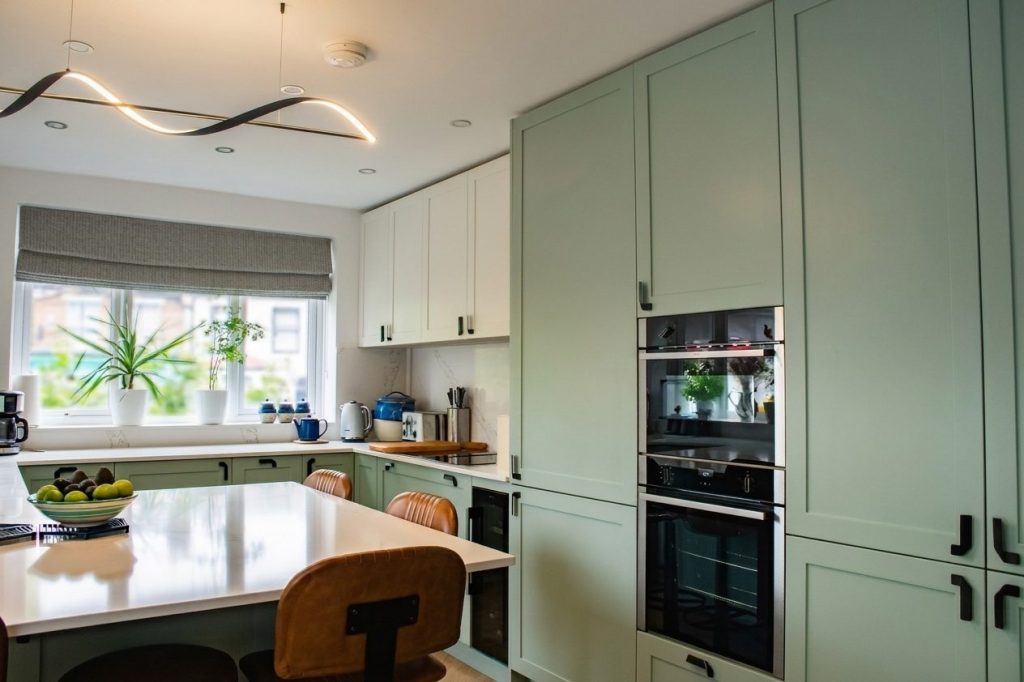
There’s a moment on most projects when appliances stop being a line on a spec sheet and start being real decisions. Someone stands in front of two ovens with the same price tag and completely different door mechanisms. Someone else asks whether the hob really needs its own extraction built in, or whether that’s just clever marketing. These aren’t small choices. They’re the ones you’ll live with every single day, long after the excitement of choosing tile colours has faded.
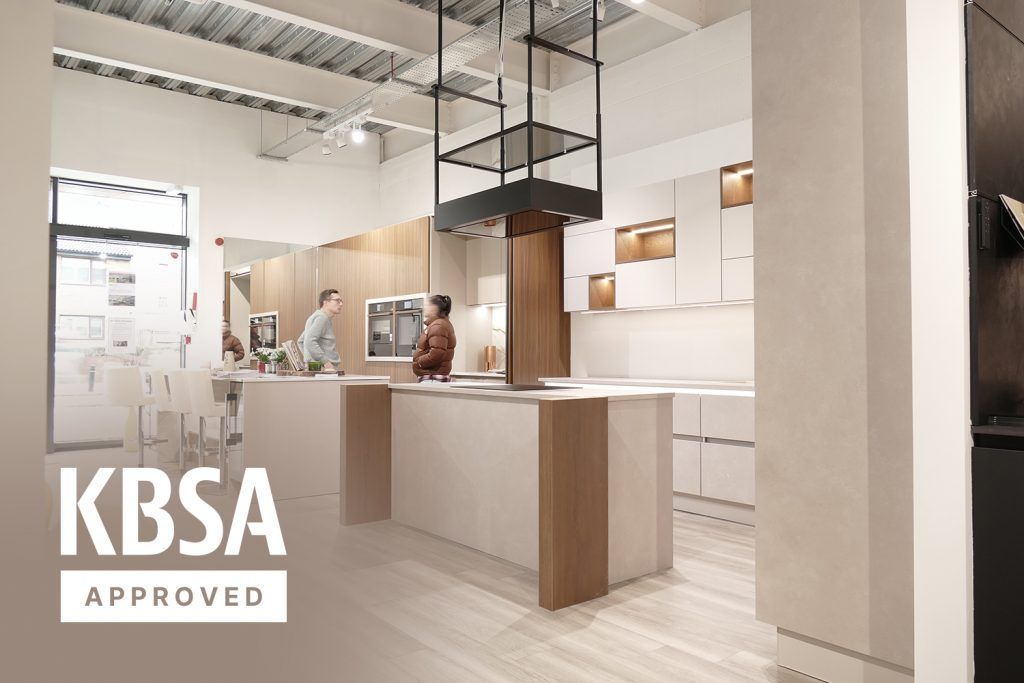
At Victoria Kitchens, appliances are specified alongside the design itself, not bolted on at the end. Here’s how we’d talk you through it if you were sitting in our Greenwich showroom right now.
Ovens and hobs: where daily use should decide the spend
This is the appliance you’ll touch the most, so it’s the one place we’d tell you not to cut corners.
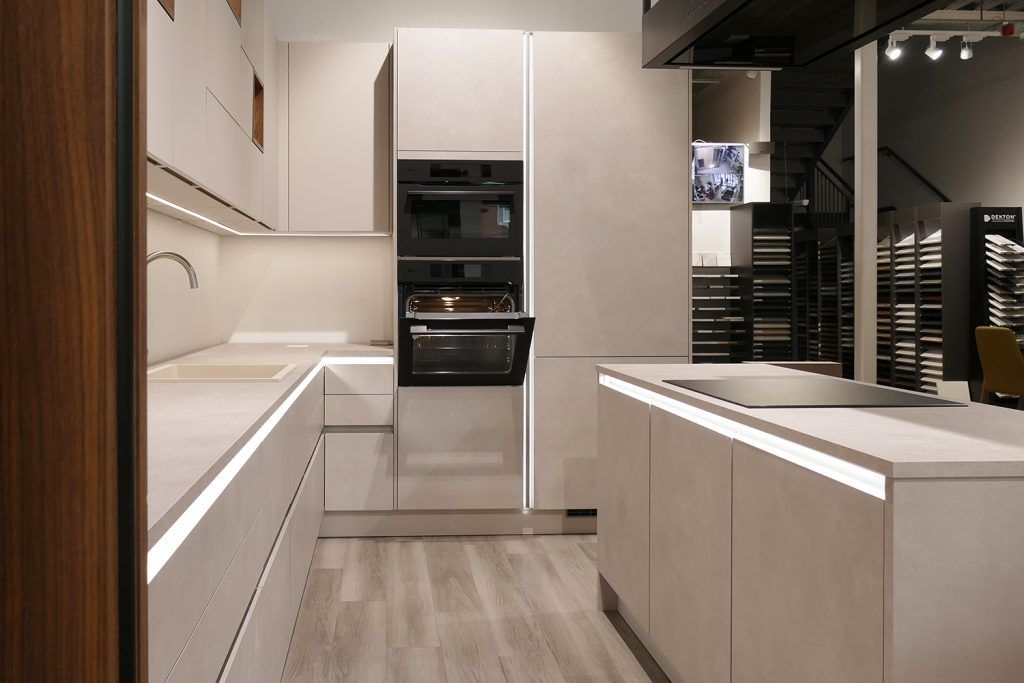
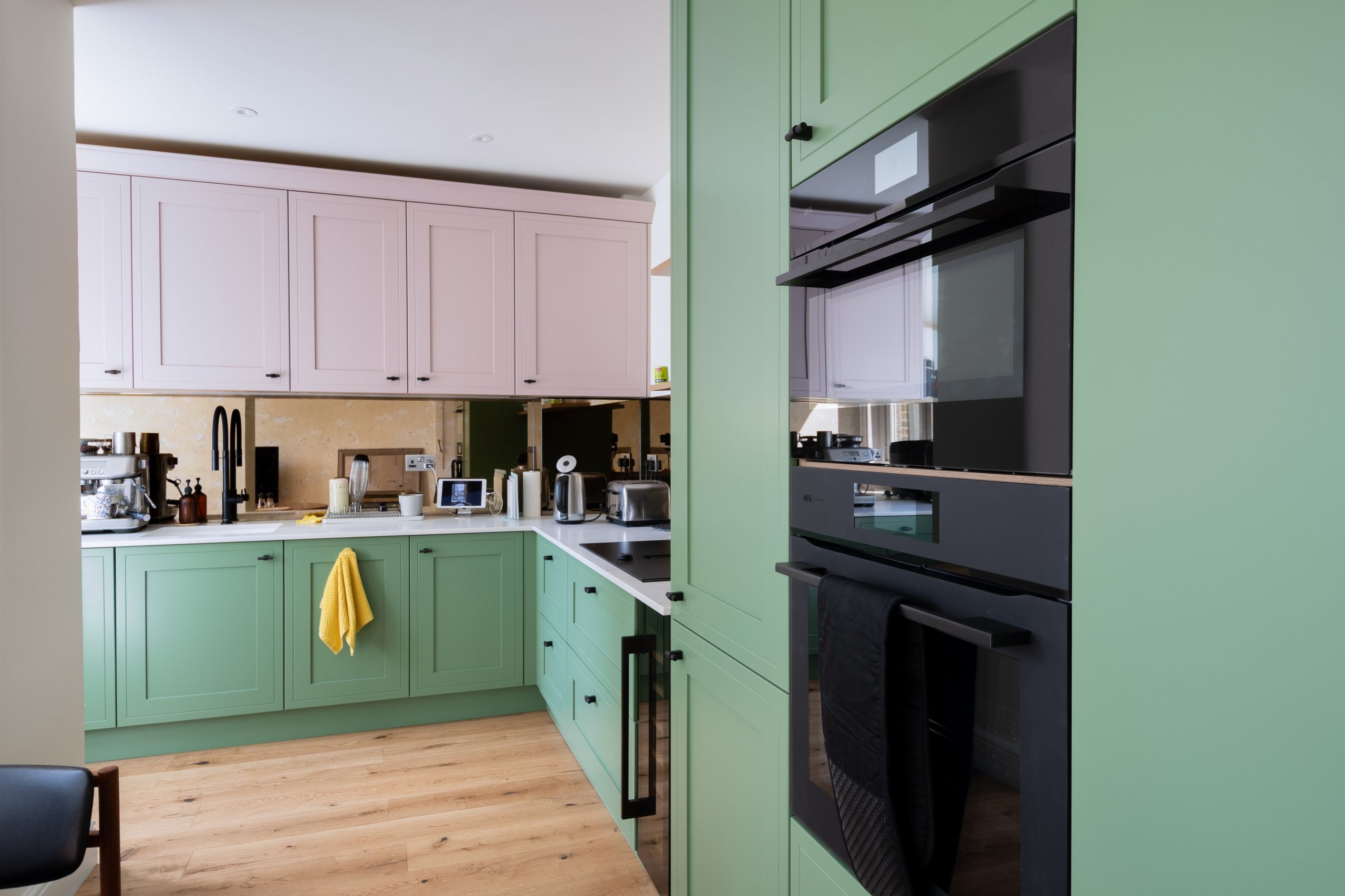
If you cook for more than two people regularly, or you’re the household doing a roast and three side dishes at once, a double oven earns its keep fast. For most households under four, a single multifunction oven with a slide-and-hide door, one that opens flush without jutting into the kitchen, covers almost everything you’ll actually need.
Induction is the hob we install most often now. It heats faster than gas, cools instantly, and is far easier to clean since there’s no flame or exposed element for food to catch on. Gas still has its fans, usually people who grew up cooking on it and like the visual feedback of a flame. Ceramic sits in between, similar in looks to induction but slower to heat and slower to cool, which is why we recommend it least unless budget is genuinely tight, but fully recommend it at all for people with heart conditions.
We fit Bosch, Neff and Siemens most weeks. They share a lot of the same engineering under the bonnet, so the real differences come down to interface and finish. Neff’s Slide&Hide door and Siemens’ studioLine range, matt black with almost no visible branding, are the two that tend to win people over once they’ve seen them in person rather than on a spec sheet.
Extraction: the appliance nobody thinks about until the smoke alarm goes off
Extraction gets treated as an afterthought on a lot of projects, which is a mistake. A badly specified extractor is one of the most common regrets we hear about once a kitchen is finished and someone’s cooking smells have moved into the sofa.
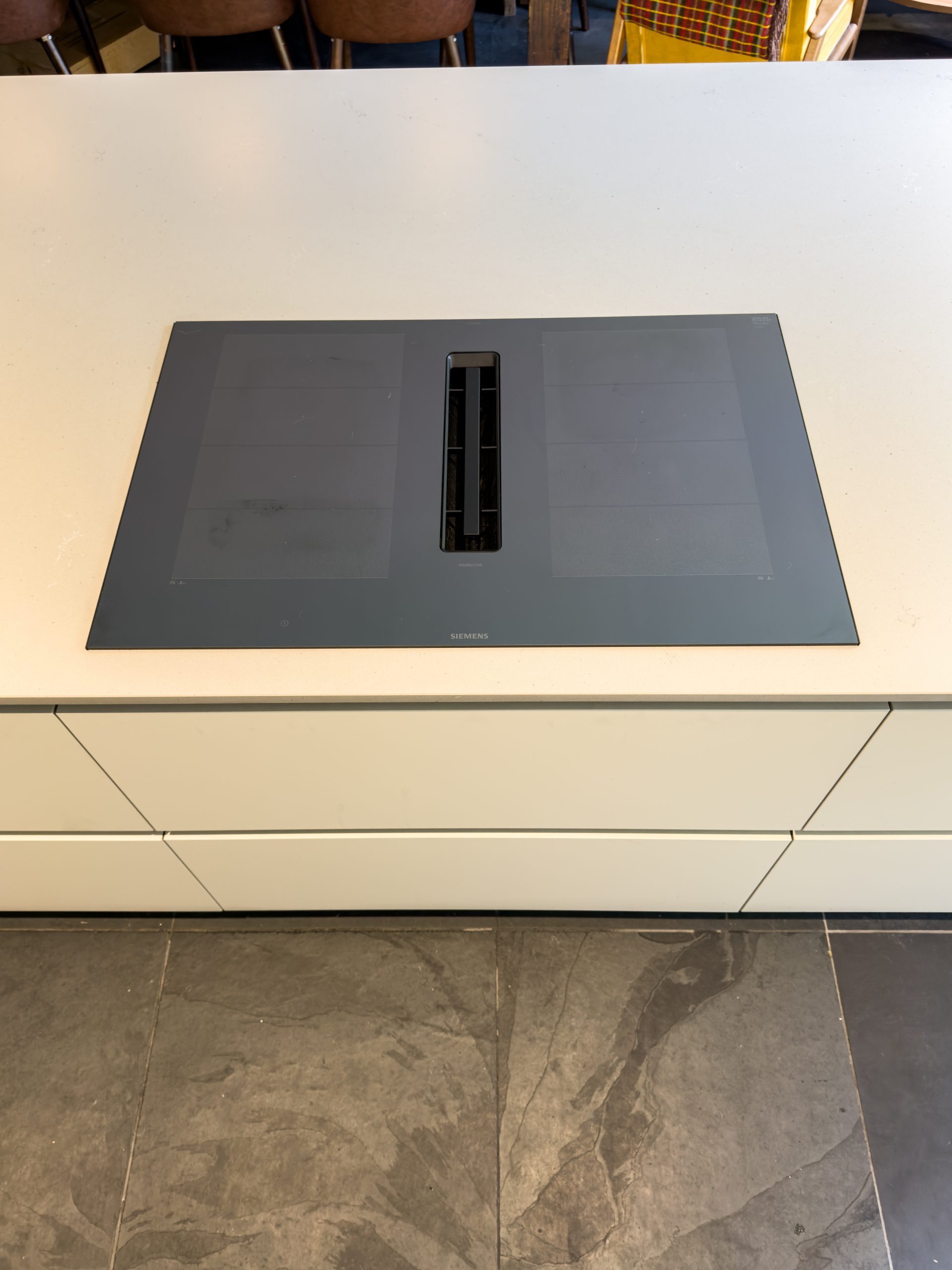
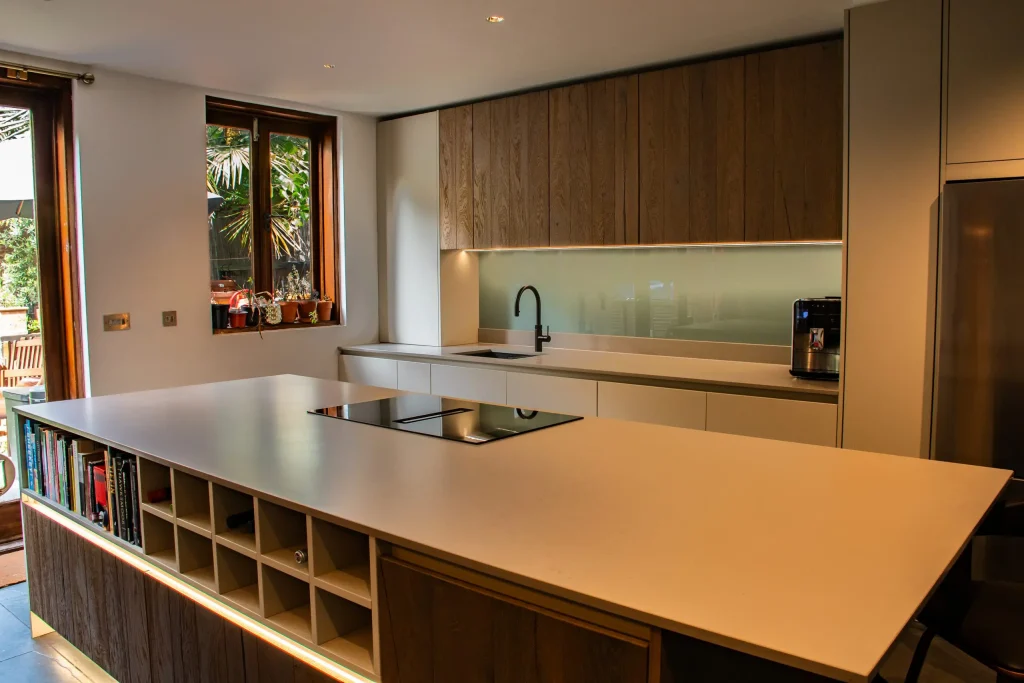
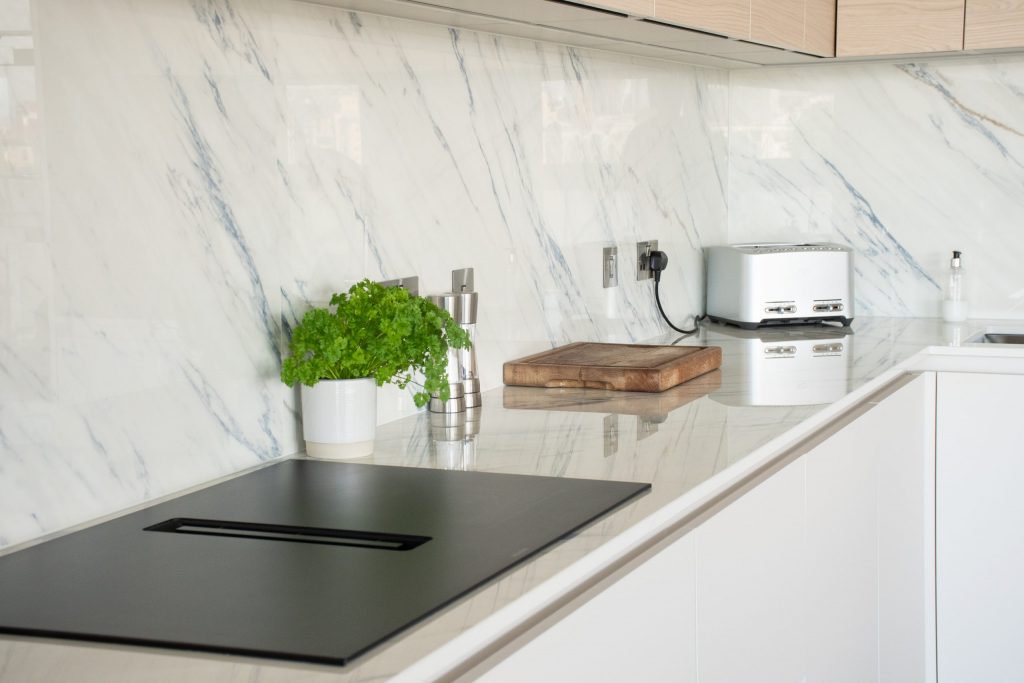
For most layouts, a ceiling or wall-mounted extractor, ducted outside rather than recirculating, does the job well. But if you’re planning an island with no nearby wall, or you simply don’t want a hood dominating the room, a hob with downdraft extraction built in is the better answer. Siemens and Bora both make versions of this, and it’s the single most useful decision in this whole guide for anyone doing an open-plan island layout. It solves a design problem that otherwise doesn’t have a good answer.
- Ceiling or island-mounted extractors, most effective when ducted outside
- Wall-mounted canopy extractors for a strong middle ground against a wall
- Downdraft hobs from Siemens and Bora, extraction built into the hob itself
- Recirculation and ducted options depending on your property
Fridges and cooling: integrated vs freestanding
This is mostly a design decision rather than a performance one. Integrated fridges sit flush behind a cabinet door and cost more for the privilege of disappearing into the run. Freestanding, usually American-style with a water and ice dispenser, makes more of a statement and often offers more capacity for the price.
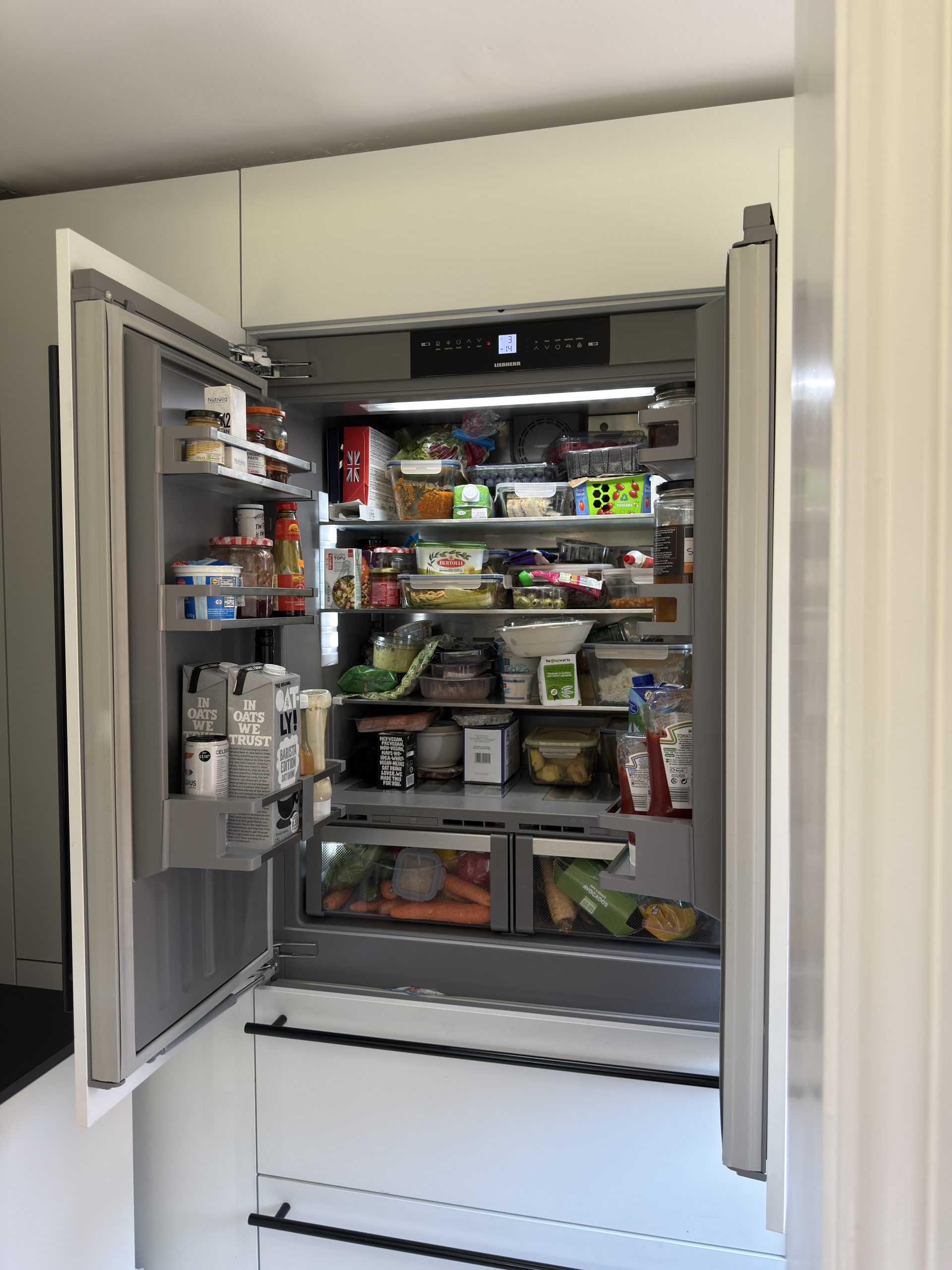
We’re official Liebherr dealers, and their BioFresh technology is worth understanding even if you don’t end up choosing it. It keeps a dedicated compartment close to freezing at controlled humidity, which genuinely extends how long fresh meat, fish and vegetables last compared with a standard fridge. If you do one big weekly shop and hate food waste, it’s a real upgrade rather than a label. If you shop little and often, you’ll notice it less.
Wine coolers and integrated drawer fridges are worth specifying at the layout stage. They’re easy to include early and nearly impossible to add gracefully once the cabinetry is built.
Washing and dishwashing: the boring category that matters more than you’d think
Integrated washing machines, tumble dryers, washer-dryer combos and dishwashers all sit behind matching cabinet fronts, so from a design point of view they’re mostly invisible either way. What differs is noise and reliability, and this is genuinely worth checking the decibel rating for.
A dishwasher around 42dB runs quietly enough to have on during dinner without raising your voice. Closer to 50dB, and you’ll notice it, especially in an open-plan space. Bosch, Siemens and Caple all make solid options here, and the price gap between a whisper-quiet model and a loud one is usually smaller than people expect.
Washer-dryer combos are the honest compromise for smaller utility areas. They save space but generally take longer per cycle and hold less than two separate machines. If you have the floor space, we’d steer you toward separate units every time.
Sinks and taps: the smallest line item with the biggest daily impact
Stainless steel, ceramic and composite sinks all do the job, so this mostly comes down to taste and how visible you want the sink to be, undermount for a seamless worktop line, inset if you’d rather have a defined edge.
The one product in this guide that consistently surprises people is the Quooker boiling-water tap. It delivers near-boiling water instantly, which sounds like a gimmick until you’ve used one for a month and realised how often you reach for the kettle without thinking. As Quooker dealers, we can tell you it’s become the most-requested single item from our clients, usually before we’ve even mentioned it ourselves.
Putting it together
If you’re working to a fixed budget and trying to decide where to spend, here’s the order we’d actually suggest, based on what gets used daily rather than what looks best in a photo:
- Oven and hob, used every day, worth the mid-to-premium tier
- Extraction, get this right the first time, especially on an island
- Dishwasher, pay for the quiet one, you’ll notice it constantly
- Fridge, integrated for a seamless look, BioFresh if food waste bothers you
- Washing appliances, separate units if you have the space, combo if you don’t
- Taps, a Quooker is a small spend for daily convenience
A few questions people ask us
Do I need to choose appliances before my kitchen design is finalised?
Ideally at the same time as your final measurements are confirmed. Appliance dimensions dictate cabinet cut-outs, so specifying them alongside the design avoids awkward gaps or late changes to cabinetry.
Is induction actually better than gas, or is that just a trend?
For most home cooks, yes. It heats and cools faster, cleans up easier, and is safer around children since the surface itself doesn’t stay hot the way a flame does. The main reason people stick with gas is habit, not performance.
Is a downdraft hob worth the extra cost over a hob plus separate extractor?
If you have an island with no nearby wall, or you don’t want a hood dominating the room, yes. Against a wall with a standard extractor already working for your layout, a separate hob and extractor will do the same job for less.
Are integrated appliances worth it over freestanding?
Mostly a design choice rather than a performance one. Integrated costs more for a seamless, handle-free look. Freestanding, especially fridges, often gives you more capacity for the price if you don’t mind it being visible.
See it all in the showroom
Specs on a page only get you so far. AEG, Bosch, Neff, Siemens, Bora, Liebherr and Caple, along with Quooker taps, are all on display and working in our Greenwich showroom, so you can open the oven doors, run the extraction, and hear how quiet that dishwasher actually is before it’s sat in your kitchen.
If you’re planning a renovation and want appliances specified properly around your layout, not picked off a list at the end, book a showroom visit or request a consultation with Victoria Kitchens today. Tea’s on us.